

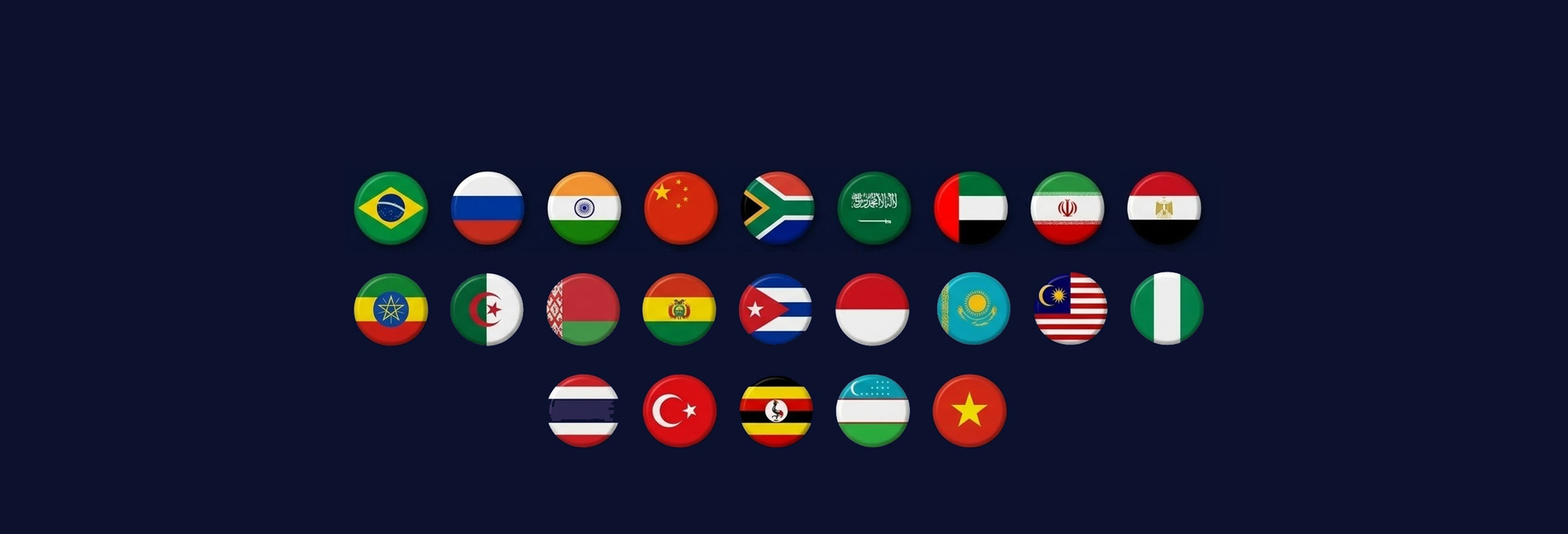

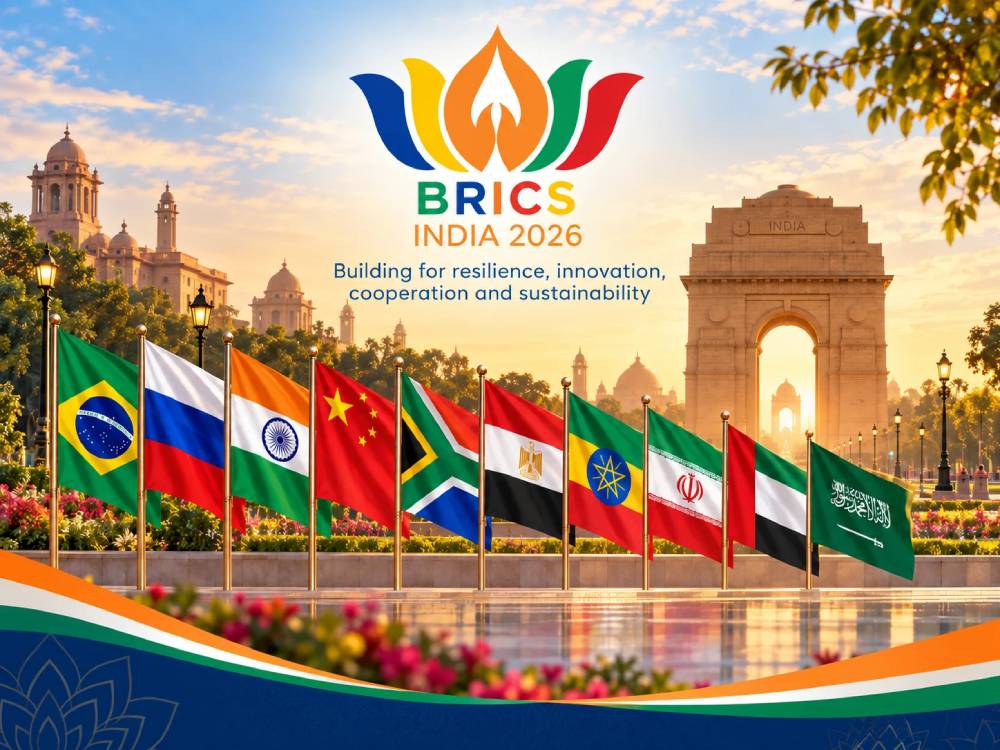
From supporting small businesses at home to helping them compete, trade and grow across borders.Following the 18th BRICS Summit, the leaders adopted the New Delhi Declaration, a 140-point document setting out the main directions for the group’s future cooperation.
For the first time, perhaps, MSMEs received such prominent attention, with a clear focus on their internationalization and on practical instruments designed to support their growth.1. From “support at home” to “grow beyond borders”
Historically, BRICS discussions on MSMEs centred on national-level support. This year, leaders explicitly reaffirmed that internationalisation of MSMEs must become a key engine of growth, and that cross-border activity needs dedicated backing.
Context: MSMEs account for more than half of business-sector value added in advanced economies and around half in emerging economies. On average, MSMEs generate 49% of business-sector value added in emerging economies and 54% in advanced economies. Source: McKinsey & Company. 2. Lending based on business data – not just collateral
The New Delhi Declaration names access to affordable finance as the main structural bottleneck holding MSMEs back from trade and global value chains. BRICS welcomed guiding principles for credit assessment of export-oriented MSMEs that use a wider set of data to evaluate risk and expand access to formal finance.
“Creditworthiness based on business data, not just collateral”
Presenting the trade ministers’ decision, India put it in even more practical terms: companies should be assessed taking their cash flows into account, not only their assets and collateral.3. Trade finance that actually works for small exporters
For a large international company, access to trade finance is a standard part of doing business. For a smaller company, the lack of such financing can become a real barrier to entering foreign markets.
The New Delhi Declaration supports the development of innovative financing mechanisms, including digital and platform-based solutions, to make trade finance more accessible to MSMEs.
The idea is highly practical: a company should be able to turn outstanding invoices into working capital faster, rather than waiting until the buyer’s full payment term has expired.
BRICS welcomed the Jaipur Consensus to study the establishment of an Invoice Discounting Mechanism for BRICS members. The proposed mechanism is intended to help MSMEs unlock working capital and strengthen their participation in international trade. Dr. Bhaskar J Sonowal, Global President of BEA, CEO & Executive Director, emphasized:
“The vision of our Honourable Prime Minister, Shri Narendra Modi, for India’s MSME sector represents an important opportunity to transform the country’s vast entrepreneurial strength into globally competitive enterprises. India’s MSMEs will be central to India’s journey towards becoming a stronger, more competitive and globally connected economy.”
What happens next: the BRICS Entrepreneurs Alliance takes the baton 🤝
Now, the BRICS Entrepreneurs Alliance is moving to the practical implementation of the BRICS leaders’ agenda by intensifying cooperation and developing partnerships among MSMEs: providing access to reliable counterparty registries and databases, reducing bureaucratic barriers, supporting companies entering new markets, and helping accelerate their growth and scaling.
More on these steps and on how the BRICS Entrepreneurs Alliance will contribute to implementing the outcomes of the BRICS Leaders’ Summit in our upcoming publications.
Related Posts

September 21, 2026
From Partnership to Business Opportunities: SKEA Joins BEA as a Global Partner
A new channel between Slovak, Eurasian and BRICS+ business communities, with technology transfer and new…
August 24, 2026
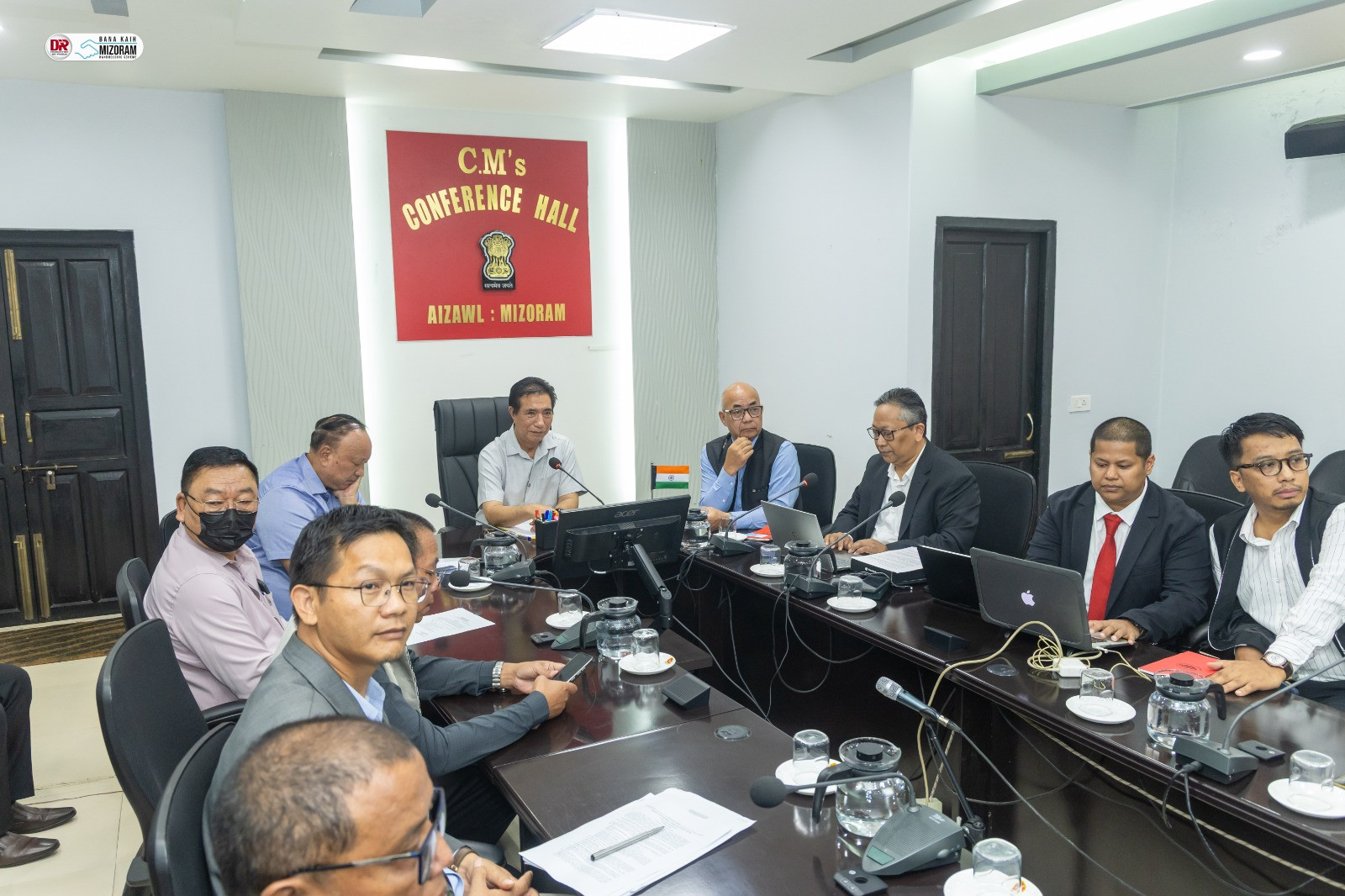
Government of Mizoram and BEA India Explore Strategic Partnership in Carbon Credits, Tourism, Technology and Agro-Processing
The BRICS Entrepreneurs Alliance (BEA) today welcomed the initiative of the Hon’ble Chief Minister of…
August 21, 2026
Global Partners: BEA Expands Its Network
Global Partners: opening new opportunities to join the BRICS Entrepreneurs Alliance The BRICS Entrepreneurs Alliance is…

July 7, 2026
BRICS Entrepreneurs Alliance advances strategic dialogue with Russia’s BRICS Sherpa
The meeting focused on reviewing the Alliance’s progress and aligning its future agenda with BRICS…